How HTML Links Shape the Web’s Hidden Architecture
The first time a user clicks a hyperlink—whether it’s a button, text, or icon—they’re engaging with a technology so fundamental it’s often overlooked. Behind every seamless transition between pages lies the HTML link, a syntax that bridges documents, APIs, and even entire ecosystems. Without it, the web would collapse into static islands of information, disconnected and inert.
Yet most discussions about HTML links reduce them to simple navigation tools, ignoring their role as the architectural glue of modern digital experiences. They’re not just pointers—they’re the invisible threads stitching together user journeys, search engine rankings, and even AI-driven content recommendations. Understanding how they function at a granular level reveals why they’re the most critical yet underappreciated element of front-end development.

The Complete Overview of HTML Links
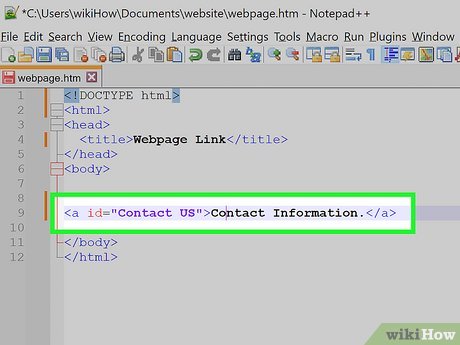
At its core, an HTML link (or hyperlink) is a markup element that creates a connection between two resources, typically web pages, but also files, emails, or even telephone numbers. Defined by the `` (anchor) tag, it’s the most versatile tag in HTML, capable of embedding metadata, tracking interactions, and dynamically altering page behavior. Modern implementations extend beyond basic navigation to include JavaScript-driven interactions, ARIA attributes for accessibility, and server-side redirects.The HTML link isn’t just a static reference—it’s a dynamic entity that interacts with browsers, servers, and third-party services. For instance, a link with `rel="noopener"` prevents security vulnerabilities when opening external sites in new tabs, while `rel="prefetch"` hints to browsers about future navigation needs, optimizing load times. These nuances transform a seemingly trivial tag into a powerhouse of functionality.
Historical Background and Evolution
The concept of hypertext predates the web itself, with Ted Nelson’s Xanadu project in the 1960s proposing interconnected documents. However, the HTML link as we know it was formalized in 1991 by Tim Berners-Lee, who included the `` tag in the first HTML specification. Early implementations were rudimentary—links were often underlined text with no styling or semantic meaning. The introduction of CSS in the late 1990s allowed developers to customize link appearances, but the real evolution came with HTML5.HTML5 standardized attributes like `rel` (for relationships) and `target`, enabling links to define their purpose (e.g., `rel="canonical"` for SEO) or behavior (e.g., `target="_blank"` for external resources). Meanwhile, the rise of Single Page Applications (SPAs) introduced client-side routing, where HTML links now trigger JavaScript events instead of full page reloads. This shift blurred the line between traditional navigation and dynamic content loading, forcing developers to rethink how links are implemented and managed.
Core Mechanisms: How It Works
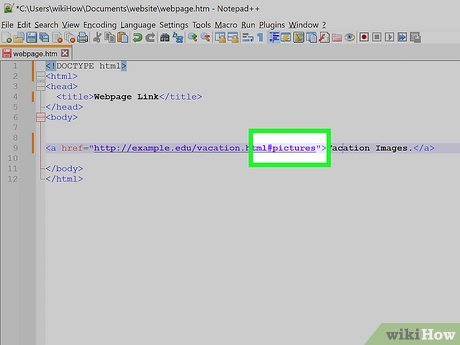
Under the hood, an HTML link operates through a request-response cycle. When a user clicks ``, the browser:1. Parses the `href` attribute to determine the destination.
2. Constructs a URL, applying relative paths if needed (e.g., `/products` becomes `https://example.com/products`).
3. Sends an HTTP request to the server, which responds with the target resource.
4. Renders the new page, updating the browser’s history stack.
Table of Contents
- The Complete Overview of HTML Links
- Historical Background and Evolution
- Core Mechanisms: How It Works
- Key Benefits and Crucial Impact
- Major Advantages
- Comparative Analysis
- Future Trends and Innovations
- Conclusion
- Comprehensive FAQs
- Q: Can an HTML link point to a non-HTTP resource (e.g., a telephone number or email)?
- Q: How do I make an HTML link open in a new tab securely?
- Q: What’s the difference between `rel="canonical"` and `rel="alternate"`?
- Q: Are there performance penalties for using too many links on a page?
- Q: How do I create a link that triggers a JavaScript function?
- Q: What’s the best practice for styling HTML links in CSS?
For dynamic links (e.g., those using `onclick` handlers), the process diverges: JavaScript intercepts the click, fetches data via AJAX, and updates the DOM without a full reload. This is the foundation of modern frameworks like React Router, where HTML links are abstracted into components that manage state and navigation programmatically.
The `rel` attribute adds another layer of control. For example:
Key Benefits and Crucial Impact
The HTML link is the linchpin of web usability, enabling users to traverse information effortlessly. Without it, the web would resemble a library where books are chained to shelves—accessible only to those who know the exact location. Beyond navigation, links drive discoverability: search engines rely on them to crawl and index content, while social media platforms use link-sharing to propagate information globally.Their impact extends to technical domains. For developers, HTML links are the primary tool for modularity—breaking monolithic pages into reusable components. For designers, they’re the bridge between visual hierarchy and functional flow. Even in non-web contexts, the principle of hyperlinking has influenced app navigation, e-books, and interactive media.
> "The web as we know it is a network of links—each one a promise of connection, whether to a product page, a research paper, or a forgotten corner of the internet. Remove them, and you remove the very essence of what makes the web interactive." — Jacob Nielsen, Nielsen Norman Group
Major Advantages
- Universal Accessibility: Links provide keyboard-navigable paths for users with motor impairments, adhering to WCAG guidelines when implemented with proper ARIA labels (e.g., `aria-label`).
- SEO Foundation: Search engines like Google use link equity (PageRank) to determine page authority. Internal HTML links distribute ranking power across a site.
- Performance Optimization: Attributes like `rel="preload"` or `prefetch` reduce latency by hinting to browsers about future resource needs.
- Dynamic Functionality: Modern links can trigger modal dialogs, lazy-load content, or even initiate API calls without page reloads.
- Security Enhancements: Proper use of `rel="noopener"` prevents tabnabbing attacks when opening external links in new windows.
Comparative Analysis
Traditional <a> Link |
JavaScript-Routed Link (e.g., React Router) |
|---|---|
|
|
| Use Case: Static Sites | Use Case: SPAs (e.g., Dashboards) |
| Blogs, documentation, e-commerce. | Admin panels, social media feeds. |
Future Trends and Innovations
The HTML link is evolving beyond its traditional role. With the rise of Web Components and shadow DOM, links may soon encapsulate self-contained interactive elements (e.g., a link that expands into a dropdown menu without external dependencies). Meanwhile, the Open Graph Protocol and Schema.org are pushing links to carry richer metadata, enabling smarter content previews and AI-driven recommendations.Another frontier is decentralized web technologies like IPFS (InterPlanetary File System), where links could point to distributed content rather than centralized servers. This shift would redefine how HTML links are resolved, potentially introducing cryptographic verification to ensure data integrity. As browsers adopt more aggressive caching strategies (e.g., HTTP/3’s multiplexing), link behavior will need to adapt to minimize redundant requests.
Conclusion
The HTML link is far more than a navigational shortcut—it’s the invisible infrastructure of the web. From its origins in hypertext theory to its current role in SPAs and AI-driven ecosystems, its importance cannot be overstated. Developers who master its nuances—whether through semantic markup, performance optimizations, or security best practices—gain a competitive edge in building resilient, user-friendly digital experiences.Yet its potential is far from exhausted. As the web fragments into specialized platforms (Web3, AR/VR, edge computing), the HTML link will need to evolve to maintain its role as the universal connector. The challenge for the next decade will be balancing its simplicity with the complexity of tomorrow’s internet.
Comprehensive FAQs
Q: Can an HTML link point to a non-HTTP resource (e.g., a telephone number or email)?
Q: How do I make an HTML link open in a new tab securely?
A: Use `target="_blank"` alongside `rel="noopener noreferrer"` to prevent security risks like tabnabbing. The `noopener` attribute detaches the new page’s `window.opener` property, while `noreferrer` omits the referring URL from headers.
Q: What’s the difference between `rel="canonical"` and `rel="alternate"`?
A: `rel="canonical"` specifies the preferred version of a page to avoid duplicate content issues (e.g., `https://example.com/page` vs. `https://example.com/page/?utm_source=...`). `rel="alternate"` defines alternate formats (e.g., `hreflang` for language variants or `media` for print stylesheets).
Q: Are there performance penalties for using too many links on a page?
A: Indirectly, yes. Excessive links can increase page weight (if styled heavily) and dilute link equity in SEO. However, the primary penalty comes from poor internal linking structure, which confuses search engines about content hierarchy.
Q: How do I create a link that triggers a JavaScript function?
A: Use the `onclick` attribute: `Click me`. For accessibility, pair it with `role="button"` and ensure keyboard operability. Alternatively, use a `
Q: What’s the best practice for styling HTML links in CSS?
A: Avoid overriding default link states (`:link`, `:visited`, `:hover`, `:active`) to maintain usability. Use `:focus-visible` for keyboard navigation, and ensure sufficient color contrast (minimum 4.5:1 for normal text). Example:
a { text-decoration: none; color: inherit; } a:hover { color: #0066cc; }
Leave a Comment
Comments are moderated before appearing. The data you submit is processed according to the Privacy Policy of 100xdevs.